Mobile Business /
Mobile hardware competition increasingly becomes ecosystem competition
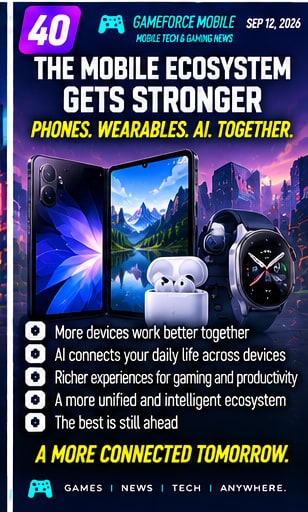
The most important trend emerging from September's device launches is that individual specifications matter less without a strong ecosystem surrounding them.
Key facts
- Topic:
- Mobile Business
- Published:
- 2026-09-12
- Reported by:
- Gameforce Mobile News Desk
Key takeaways
- The most important trend emerging from September's device launches is that individual specifications matter less without a strong ecosystem surrounding them.
- Apple connects its A20 Pro chip, iPhone Duo, Watch Series 12, AirPods 5 and Siri AI.
- Samsung links phones, foldables, Galaxy Watch and smart-home products.
The most important trend emerging from September's device launches is that individual specifications matter less without a strong ecosystem surrounding them. Apple connects its A20 Pro chip, iPhone Duo, Watch Series 12, AirPods 5 and Siri AI. Samsung links phones, foldables, Galaxy Watch and smart-home products. Google is embedding Gemini into Android itself, while Xiaomi combines HyperOS with its own XRing silicon, phones, tablets, vehicles and home devices.
Huawei is pursuing similar vertical integration around HarmonyOS and Kirin processors. Cameras and displays can often be matched within a product generation, but ecosystem history is much harder to replicate because users accumulate subscriptions, accessories, health records, passwords, photos and connected devices over years. AI increases the value of that context because assistants become more useful when information moves securely between devices.
The smartphone remains the central computer in this environment, but increasingly its job is to coordinate everything around it rather than operate alone.