Mobile Hardware /
Pixel 11 Gaming Stutter Investigation Points Finger at ANGLE
Google's Pixel 11 family has encountered another gaming headache, and this one appears considerably more complicated than simply throwing a faster GPU at the...
Key facts
- Topic:
- Mobile Hardware
- Published:
- 2026-09-21
- Reported by:
- Gameforce Mobile News Desk
Key takeaways
- Google's Pixel 11 family has encountered another gaming headache, and this one appears considerably more complicated than simply throwing a faster GPU at the problem.
- A phone can technically produce plenty of frames while still feeling unpleasant if individual frames arrive inconsistently.
- For mobile gamers, smooth beats theoretically fast every time.
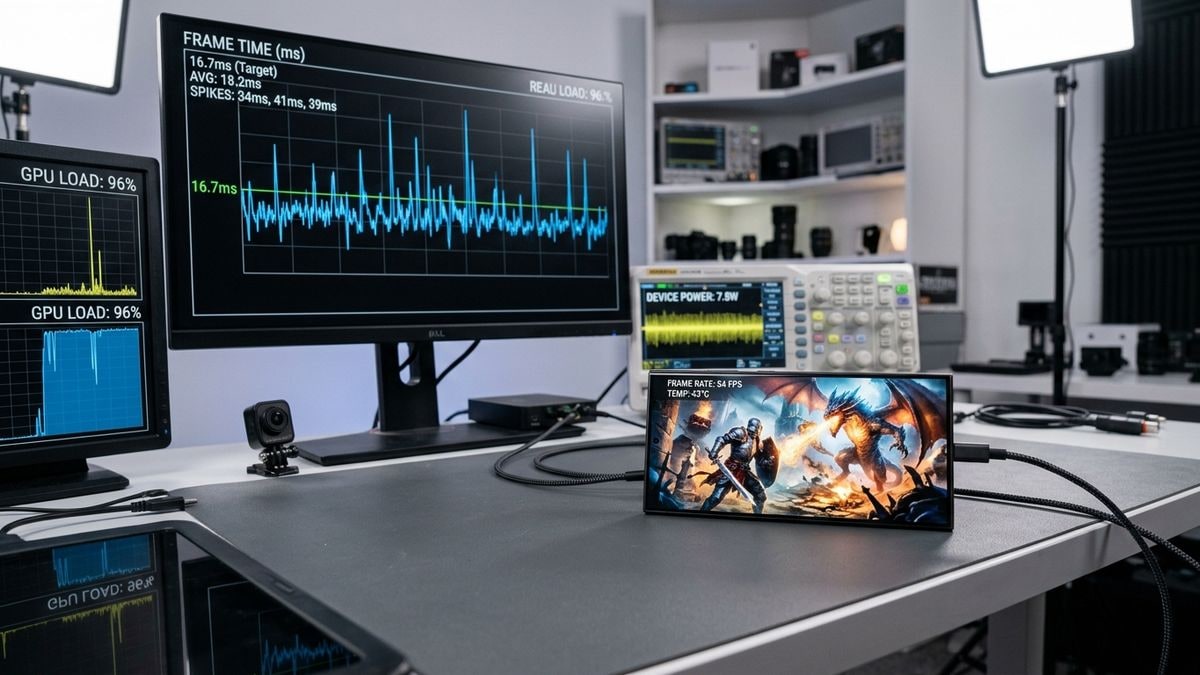
Google's Pixel 11 family has encountered another gaming headache, and this one appears considerably more complicated than simply throwing a faster GPU at the problem. Testing by Android Authority has linked some of the microstuttering experienced in games such as Genshin Impact to Google's decision to make ANGLE the default OpenGL ES implementation on the Pixel 11 series. ANGLE translates OpenGL ES graphics calls rather than allowing games to use the phone's native implementation directly.
That's useful for compatibility and Google's longer-term graphics strategy, but the testing found that switching away from ANGLE could dramatically improve frame consistency in Genshin Impact. That's particularly interesting because average frame rates don't always tell the whole gaming story. A phone can technically produce plenty of frames while still feeling unpleasant if individual frames arrive inconsistently.
The Pixel 11's Tensor G6 and PowerVR GPU combination had already attracted scrutiny over gaming performance and graphical glitches, making this latest investigation another unwelcome chapter. There is an important caveat: changing developer graphics settings isn't a sensible universal recommendation, and results can differ between games. Still, the findings suggest at least some Pixel 11 gaming complaints may involve Google's graphics software stack rather than raw silicon alone.
For mobile gamers, smooth beats theoretically fast every time.