Mobile Industry /
Brazil Introduces New Games Industry Framework to Support Developers, Investment and International Expansion
Brazil regulates its Legal Framework for the Games Industry by presidential decree, establishing state financing pathways, export hubs, and esports status.
Key facts
- Topic:
- Mobile Industry
- Published:
- 2026-10-15
- Reported by:
- Gameforce Mobile News Desk
Key takeaways
- President Lula signs decree regulating the Legal Framework for the Games Industry.
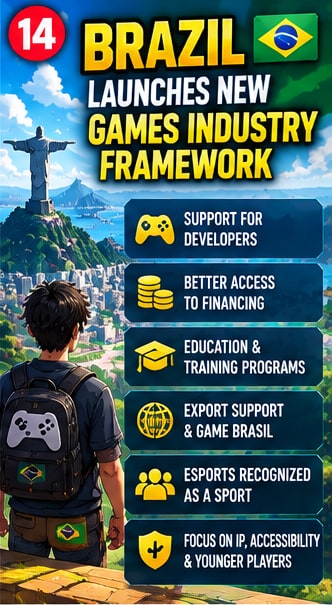
- Establishes 'Game Brasil' public showcase and expands financing across all five regions.
- Formally recognizes esports as an official competitive sporting discipline.
Brazil has taken another significant step toward strengthening its domestic video games industry, with President Luiz Inacio Lula da Silva signing a decree implementing the country's Legal Framework for the Games Industry on October 14. The development received fresh international industry coverage on October 15 and could prove particularly important for Brazil's growing mobile game development sector.
The original legislation was enacted in 2024, but the new decree establishes additional mechanisms for supporting game development, professional training, research and international commercial activity. The framework connects the games industry with government programmes covering culture, technology, innovation and business development. Planned initiatives include improved access to financing, educational programmes across Brazil's five regions and additional support for exporting locally developed games.
A new public platform called Game Brasil will help showcase Brazilian titles and direct potential players toward available distribution channels. The measures also address intellectual property protection, accessibility and safeguards for younger players. Esports receives formal recognition as a competitive sporting activity, potentially strengthening its position within public programmes and professional development initiatives.
Brazil's games industry association Abragames contributed to the policy discussions, while the Brazil Games export programme will continue connecting local developers with international publishers and investors. Some proposed financing improvements remain subject to further approval, so the framework should not be interpreted as an immediate guarantee of funding for every studio. Nevertheless, the initiative reflects growing recognition that video games represent a substantial creative and technological industry.
For Brazilian mobile developers, stronger access to capital and international partners could help transform promising independent projects into sustainable businesses.