Mobile Gaming Industry /
South Korea's Top 30 Game Makers of 2026 Put Mobile Gaming's Global Ambitions in the Spotlight
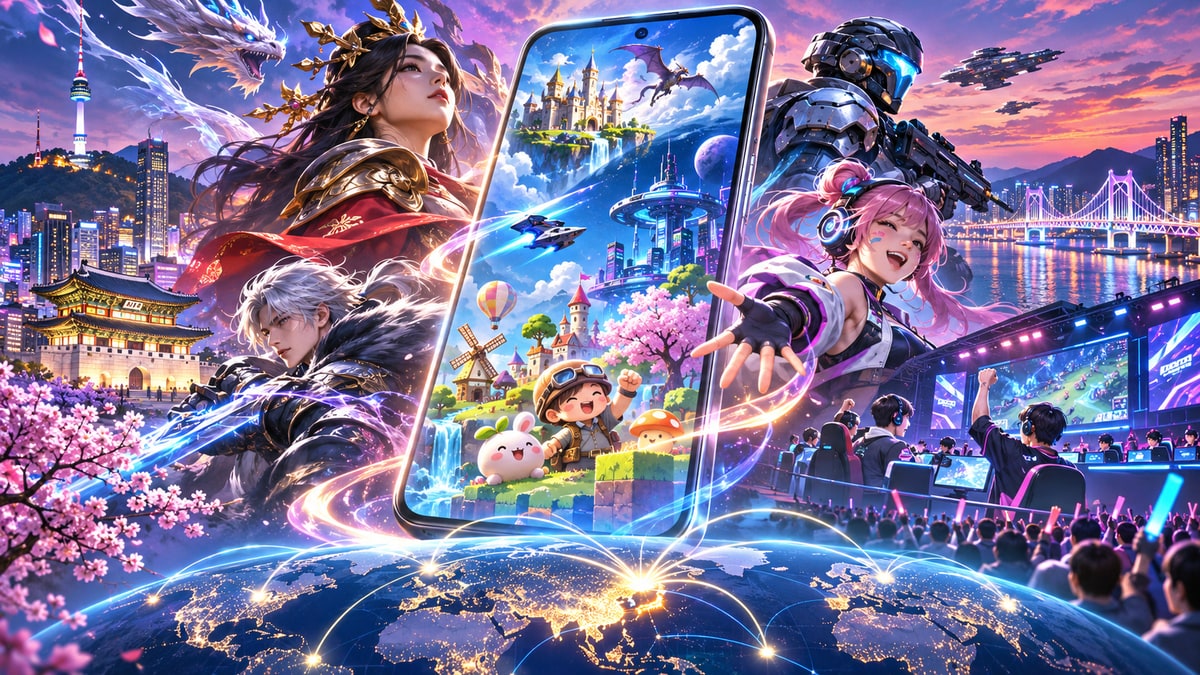
Published on November 20 alongside G-STAR 2026 in Busan (November 19–22), PocketGamer.biz's Top 30 Korea Game Makers of 2026 highlights South Korea's leading studios as domestic mobile downloads soften and publishers focus on international expansion across Asia, North America, and Europe.
Key facts
- Topic:
- Mobile Gaming Industry
- Published:
- 2026-11-20
- Reported by:
- Gameforce Mobile News Desk
Key takeaways
- PocketGamer.biz released its Top 30 Korea Game Makers of 2026 on November 20 during G-STAR 2026 in Busan.
- While Korean consumer spending remains substantial, declining domestic mobile downloads are pushing studios to compete harder for retention.
- South Korean developers are increasingly targeting Southeast Asia, Japan, North America, and Europe for sustainable multi-year growth.
South Korea's games industry is receiving renewed attention as PocketGamer.biz publishes its Top 30 Korea Game Makers of 2026 on November 20. The annual recognition arrives during G-STAR 2026 in Busan, where developers, publishers and international business partners are gathering between November 19 and 22. South Korea has long been one of the world's most influential gaming markets, producing major online role-playing franchises and mobile titles with substantial audiences across Asia.
Its developers have also played an important role in establishing the commercial systems associated with persistent online games, character progression and competitive multiplayer experiences. Yet the industry faces a complicated market environment.
Recent reporting indicates that South Korean mobile game downloads have declined while consumer spending remains substantial, suggesting that publishers increasingly compete for engagement from established audiences rather than relying entirely on a constant stream of new players. International expansion is consequently becoming more important.
Korean developers are seeking opportunities in Southeast Asia, Japan, North America and Europe, while overseas publishers continue to compete for attention within Korea itself. Recognition programmes such as the Top 30 provide a useful snapshot of the companies shaping that competition, although an editorial ranking should not be confused with an audited revenue league table.
For mobile players, the significance is straightforward: Korean studios remain important contributors to the games appearing on international storefronts. For publishers, the lesson is less comfortable. Making an excellent game is difficult enough. Making one that succeeds internationally, survives changing player habits and continues earning money several years later requires considerably more than a spectacular launch trailer.