Hardware /
Xbox Cloud Gaming Controller Previews Highlight the Growing Importance of Smartphone Gaming Hardware
Microsoft expands Xbox Cloud Gaming previews with phone-as-controller TV streaming and direct Wi-Fi controller tech aimed at reducing cloud latency.
Key facts
- Topic:
- Hardware
- Published:
- 2026-11-06
- Reported by:
- Gameforce Mobile News Desk
Key takeaways
- Preview enables Android and iOS smartphones to act as virtual gamepads for TV cloud gaming.
- Direct Wi-Fi testing for Xbox Nano Controller bypasses Bluetooth to minimize streaming latency.
- Signals Microsoft's broader strategy of turning smartphones into cloud ecosystem input peripherals.
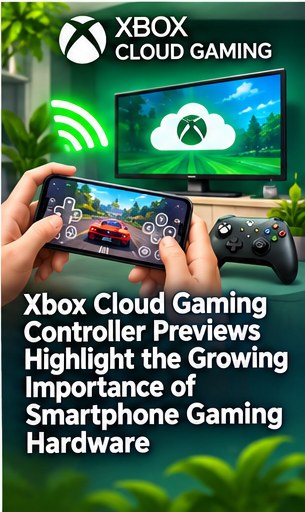
Microsoft's newly introduced Xbox Cloud Gaming controller previews are receiving further attention as players evaluate the implications of using smartphones as gaming input devices. The features originally entered preview on November 4, with additional analysis published on November 6. One option allows a supported Android or iOS smartphone to function as a virtual controller for games streamed to compatible smart televisions.
This could make cloud gaming more accessible to households without a dedicated gamepad, although touchscreen controls may not provide the precision required for every genre. Microsoft is also testing direct Wi-Fi connectivity for its Xbox Nano Controller in the United States. Rather than sending inputs through a television using Bluetooth, the controller communicates directly with the cloud infrastructure running the game.
This arrangement is intended to reduce input latency by eliminating an intermediate connection. Actual improvements will depend on network quality, server location and game-specific requirements. Both features remain experimental, with availability limited by device compatibility, geography and supported games.
Their development reflects an important trend in gaming hardware: cloud services increasingly treat smartphones as components of a wider gaming ecosystem rather than exclusively as standalone gaming devices. The ability to use an existing phone as a controller could reduce costs for casual users, while dedicated low-latency accessories may appeal to demanding players. Apparently the smartphone has decided that being a camera, television, computer and communication device is insufficient.
It would now also like to replace the controller.