Handheld Gaming /
Next-Generation Xbox Handheld Reportedly Faces Internal Debate Over Windows and Gaming Software
Microsoft's planned 2027 Xbox handheld reportedly sparks internal debates between Windows compatibility and a streamlined console-style interface.
Key facts
- Topic:
- Handheld Gaming
- Published:
- 2026-10-22
- Reported by:
- Gameforce Mobile News Desk
Key takeaways
- Reports indicate internal software architecture discussions between Xbox and Windows divisions regarding the planned 2027 handheld.
- Debate centers on PC application compatibility versus a console-like gaming UI optimized for power consumption and instant standby.
- Xbox CTO Scott Van Vliet disputed elements of recent reporting, with official hardware specifications and OS choice still unannounced.
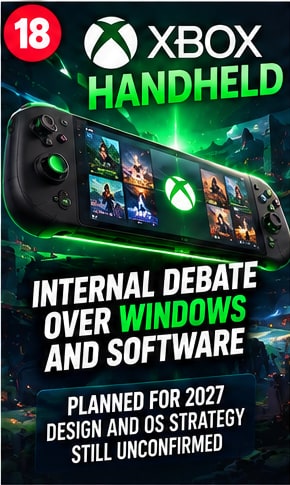
New reporting concerning Microsoft's future Xbox hardware suggests that the company's planned handheld gaming device has become part of an internal debate over software architecture. According to coverage published on October 21, Microsoft is exploring a dedicated Xbox handheld for 2027 alongside a next-generation home console currently associated with the Project Helix codename. The central question reportedly involves how closely the new devices should resemble conventional Windows PCs.
One approach would emphasise compatibility with existing Windows software, while another would prioritise a more streamlined console-style interface designed specifically for gaming. Such decisions are particularly important for portable devices, where power consumption, memory management, standby behaviour and interface simplicity can substantially influence the user experience.
A conventional desktop operating system provides flexibility but can introduce complications that are less noticeable on a stationary gaming computer. Reports have suggested disagreements between the Xbox and Windows organisations over the appropriate direction. However, Xbox chief technology officer Scott Van Vliet has disputed aspects of the reporting, and Microsoft has not officially announced a finished handheld product. Specifications, pricing and launch arrangements therefore remain uncertain.
The wider market has already demonstrated considerable interest in Windows-based handheld gaming PCs, including devices developed by Asus, Lenovo and MSI. Microsoft's challenge would be delivering an experience that combines the flexibility of PC gaming with the simplicity traditionally associated with consoles. Apparently the hardest part of building a portable Xbox may not be fitting powerful hardware into a small case. It may be deciding which version of Windows should greet players when they turn it on.