Mobile Business /
Mobile ecosystem competition increasingly revolves around years of accumulated user data
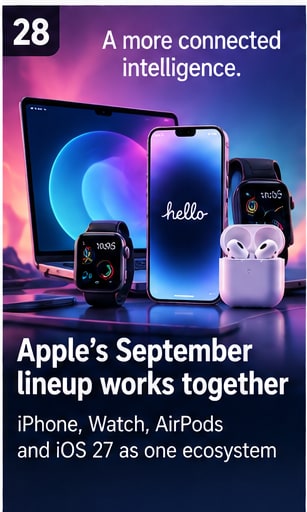
The September launch cycle demonstrates why Apple, Google, Samsung and other major platform companies increasingly talk about ecosystems rather than individu...
Key facts
- Topic:
- Mobile Business
- Published:
- 2026-09-14
- Reported by:
- Gameforce Mobile News Desk
Key takeaways
- The September launch cycle demonstrates why Apple, Google, Samsung and other major platform companies increasingly talk about ecosystems rather than individual devices.
- Phones are replaced every few years, but health history, photographs, passwords, messages, purchased applications, cloud storage and connected accessories can remain with a user for decades.
- AI makes those accumulated datasets more valuable because personal assistants become more useful when they can understand routines and context across multiple devices.
The September launch cycle demonstrates why Apple, Google, Samsung and other major platform companies increasingly talk about ecosystems rather than individual devices. Phones are replaced every few years, but health history, photographs, passwords, messages, purchased applications, cloud storage and connected accessories can remain with a user for decades.
AI makes those accumulated datasets more valuable because personal assistants become more useful when they can understand routines and context across multiple devices. Apple's iOS 27 and Siri AI rollout is an obvious example, while Samsung and Qualcomm are promoting similar intelligence across phones, watches and eyewear. The benefit for users is continuity: devices can cooperate instead of operating as isolated products. The downside is switching cost.
Leaving an ecosystem becomes harder when the most valuable feature is not a specification but years of personal history. Mobile competition is therefore shifting from who builds the best phone this year to who can build the most useful long-term digital environment around the user.